

Learn how to make the most delicious, anti-inflammatory turmeric-ginger broth! I love adding chopped fresh turmeric to chicken soup, but this recipe takes the turmeric content and bioavailability to a whole new level. I've created a broth that uses both fresh turmeric and dried, powdered turmeric in combination with other ingredients to get the maximum amount of nutrients into the broth.
Curcuminoids are beneficial polyphenol chemicals found in turmeric. They shut down, or dampen, the primary inflammatory switch in the body, which is a very important step in healing many health issues including cancers, osteoporosis, type 2 diabetes, Alzheimer's disease, autoimmune diseases, heart disease, and food allergies & sensitivities.
Disease is caused by getting too many things that you don't need (inflammation, stress, toxins, infections, allergens), and too little of the things that you do need (antioxidants, relaxation, exercise, healthy foods, proper nutrients).
The magic of curcumin is that it is a master-balancer (an adaptogen). Cancer research has shown that curcumin can shut off the master switch of inflammation called nuclear factor kappa beta (NFκB) better than almost anything else, making it one of the most potent natural anti-inflammatory substances. At the same time, research has also demonstrated that curucmin can help to combat various infections (yeast, bacterial, and viral) that can lead to the inflammation in the first place. Curucmin also activates our genes (via a gene transcription factor call Nrf2) to signal our cells to make more antioxidants, which lowers inflammatory damage. But there is more! When this Nrf2 is activated, we also start to make hundreds of beneficial detoxification proteins to remove harmful toxins from our cells.
Turmeric is amazing, isn't it?
The polyphenols (which include the curcuminoids) in turmeric are lipophilic, which means turmeric is best mixed or cooked with fat so you can get the full benefit of this food! This is one of the ways turmeric has been traditionally used in India. Spices are always sautéed first in fat (often ghee) before being used in recipes. This not only allows for the absorption of the beneficial polyphenols, but it also brings out the flavors in the spices.
Read more »
Healing Turmeric-Ginger Broth
By Unknown

Need a little more assistance in the kitchen creating this meal? Then check out the elimination diet video cooking series I created on how to make plantain tortillas and this chicken taco filling, plus a few more easy and delicious elimination diet recipes. You can sign up here to watch the videos.
Use this recipe for Phase 2 of our Elimination Diet program. Not quite sure what an elimination diet is? An elimination diet is a powerful tool to get to the root of most diseases and disorders. Why? Because most disease begins in the gut. The gut has the highest concentration of immune cells, and the most common thing that the immune cells will react to is food.
When you are constantly in pain, moody, and fatigued, your body is inflamed. In other words, your immune cells are being irritated by something in your environment. What is the most likely suspect that is irritating you? Surprisingly, it’s your food.
Odds are that foods you are eating every day are leaving you sick and tired. How do you find out which ones? The Elimination Diet. This foundational tool of Functional Medicine has been used for centuries to discover which foods are making you ill and which ones can make you feel incredible.
The Elimination Diet is a simple process of removing all potentially problematic foods from your diet until your symptoms subside—usually a few weeks. Then you slowly reintroduce foods back into your diet, one by one, to see which ones bring your symptoms back. By finding the foods that are behind your suffering, you can completely turn your health around and elevate your quality of life.
If you are curious about trying an elimination diet and not sure where to begin then check out our online Elimination Diet Support Program and Elimination Diet book, both of which provide excellent tools that walk you through each step of the elimination diet.
What if these new tools helped you to become a better you? A lighter, more energetic, happier you! That's what doing an elimination diet is all about.
While on an elimination diet, you'll find that many of the foods you are accustomed to eating everyday are off limits. You'll get to experience new flavors and new foods that promote healing at the cellular level. And you can start right now with these nightshade-free chicken tacos.
Read more »Nightshade-Free Chicken Taco Recipe (corn-free, gluten-free, dairy-free)
By Unknown
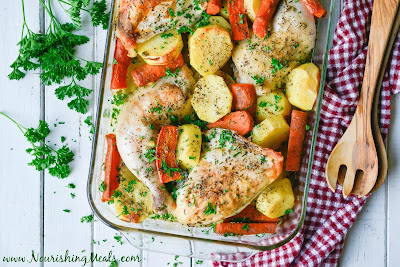
I love super easy meals on busy weekday evenings, don't you? This recipe (including the variations below) is one of my go-to weeknight meals. I wanted to share it with you because we all could use more ideas on how to create doable, nourishing family dinners.
In addition to this meal, here are some more of my favorite weeknight meals: Baked Wild Salmon with Steamed Potatoes, Kale and Pesto. Slow Cooked Chicken Curry over cooked quinoa. Soothing Red Lentil Soup served with cooked quinoa or basmati rice and a dollop of Raw Cilantro-Lime Chutney. I also have plenty more recipes for easy weeknight dinners in my Nourishing Meals cookbook and Whole Life Nutrition Cookbook!
I love to serve this baked chicken and potato dish with a big green salad or some sort of raw kale salad.
I know potatoes have received a bad rap for years, but did you know that potatoes contain high levels of potent antioxidants similar to levels found in dark cherries, strawberries, plums, and apples? In fact, the darker colored potatoes like the purple varieties contain the highest level of antioxidants....not surprisingly! All potatoes contain anti-inflammatory antioxidants like phenols, carotenoids, flavonoids, and anthocyanin compounds. Potatoes are also an excellent source of easily digested complex carbohydrates. Including something starchy with dinner can help induce restful sleep. I've seen many people (and experienced this myself) reduce their carbohydrate consumption too much to the point where they cannot fall asleep or stay asleep. For some, including potatoes with dinner might be just the thing! True comfort food!
Read more »Easy One-Pan Oven Roasted Chicken with Potatoes and Carrots
By Unknown

I love curry dishes, but curry powder typically contains chili peppers (a nightshade vegetable). If you are following the Elimination Diet and craving curry, try this stew! It's warming, though not as spicy as a typical curry would be. I use garam masala powder, cumin seeds, and turmeric powder to create a flavorful dish without chili peppers. I know it's not authentic at all, but it is totally satisfying if you are on a nightshade-free diet or elimination diet!
Consuming nightshades (potatoes, peppers, eggplant, tomatoes, goji berries) can trigger joint pain, migraines, skin rashes, acne, GI upset, and inflammation in SOME people. Are you sensitive to nightshades? Please share your experiences in the comment section below. If you think nightshades might be an issue for you, the best way to determine that is to do an Elimination Diet.
Garam masala is a staple spice blend at our house. I use it a lot to flavor roasted vegetables, or garbanzo bean dishes. Garam means warm, and Masala means spice blend. Garam masala typically contains cardamom, cinnamon, cloves, cumin, black pepper, and coriander.
Read more »
Masala Chicken and Vegetable Stew (Nightshade-Free)
By Unknown

Your grandmother was right…chicken soup is one of the best medicines when you are sick. In fact, you might want to consider gathering ingredients for homemade chicken soup before reaching for that over-the-counter cold medicine. Soup made from whole chickens is rich in carnosine, which has been shown to inhibit damage from viruses in the body, including H1N1! Beyond this, does't it just feel good to sip on a warm, brothy soup when you are under the weather?
I've created a chicken soup recipe with even more immune-boosting ingredients, such as the herb astragalus. You can find it at your local herb store or in the bulk herb section of your local health food store. You can even order it online. I crave astragalus in the winter time. If I ever feel the inkling of a cold or flu I start taking the tincture a few times a day.
I've also added plenty of fresh ginger, garlic, shiitake mushrooms, and some red chili flakes. Did you know that both the astragalus and shiitake mushrooms stimulate natural killer cells, whose job is to directly attack viruses and harmful bacteria? The ginger and chili flakes give the soup some heat to stimulate the sinuses to drain. Ginger is also a broad-spectrum antimicrobial and is an amazing anti-inflammatory herb. We use it to make healing root teas often at this time of year. You can read more about the benefits of ginger and shiitake mushrooms in this post.
Read more »
Super Immune-Boosting Chicken Soup
By Unknown

The days are getting shorter, colder, and busier! Having simple, nourishing meals ready to eat when you get home from work or school is so important. Now that the weather has changed, I've been using my slow cooker more often. This chicken curry recipe is so simple that I almost didn't post it! I've made it a number of times in the last few weeks. Too many actually, because now my children are starting to complain!
Today I forgot to add the tomatoes which caused the stew to lack some flavor and "oomph!" Adding something acidic, like tomatoes, helps to balance flavors. A little freshly squeezed lime juice can remedy a lack of tomatoes though!
You can add different vegetables to the pot if desired, just make sure to cut them large enough so they maintain their shape and don't turn to mush during the long cooking time. Try sweet potatoes, rutabagas, potatoes, or chunks of peeled and cubed pie pumpkin! If you want to add zucchini or red bell pepper then add them in during the last 30 to 60 minutes of cooking (less time if you have your slow cooker set on high, more if it is set on low).
Read more »
Simple Slow-Cooked Chicken Curry
By Unknown

When summer's produce is in abundance we like to create meals that revolve around it, like this one. If you are vegan or vegetarian you can substitute cooked blacked beans or sautéed tempeh for the chicken. I think you'll find the Spicy Avocado Dressing rather addicting! Tom and I like to make a batch of this dressing with the whole jalapeño—seeds and all, but for the children we make it without the seeds.
Did you know that eating a small avocado with a meal containing carotenoids (found in the tomatoes, peppers, and salad greens) helps to absorb these beneficial compounds? Carotenoids, like beta-carotene, alpha-carotene, gamma-carotene, lycopene, lutein, zeaxanthin, and beta-cryptoxanthin all need to be consumed with fat to optimize absorption in the intestines. One also needs to have a functioning small intestine for this to occur (gluten, antibiotics, yeast overgrowth, and environmental toxins can damage the gut and impede absorption of fats and fat-soluble nutrients). Once in the body these carotenoids act as powerful antioxidants mopping up free radicals. Some of these carotenoids can also be converted into vitamin A (all-trans-retinol). We need vitamin A to assist with gene transcription, proper development of an embryo, various reproductive processes, night and color vision, skin health (acne), cellular communication, and proper immune function. Vitamin A is found in liver, meat, and dairy products. In order to convert carotenoids from plants into vitamin A we need to have adequate zinc and proper thyroid function as the T3 thyroid hormone helps in the conversion process. When pregnant and lactating the need for preformed vitamin A increases quite a bit so be sure to consume enough carotenoids from plants and vitamin A from animal sources, or if you are vegan, be sure to consume enough iodine, zinc, and selenium-rich foods for proper thyroid function so you can properly convert carotenoids from plants into Vitamin A.
Read more »
Chicken Fajita Salad with Spicy Avocado Dressing
By Unknown

We like to roast a whole, organic chicken on occasion for family meals. In the wintertime I will serve it with sautéed winter greens, such as kale and collards, a few spoonfuls of raw sauerkraut or cultured vegetables, and roasted root vegetables. In the springtime, I like to serve it with a light quinoa radish salad with fresh parsley, lemon, and chopped sorrel or napa cabbage. The next day I pull the meat off the bone and use it to make chicken salad, chicken pot pie, or toss it into soup.
So nothing goes to waste, I put the bones and skin into a stockpot along with a chopped onion, celery, carrot, garlic, peppercorns, fresh herbs, a piece of kombu, and a little cider vinegar; cover with water, and simmer for about 6 hours. This creates the most wonderful, nutritious, healing soup stock. You can freeze it in quart jars and use it everywhere stock or broth is called for in a recipe.
We always use organic chicken, but prefer to use organic chicken that is also local and pastured. What's the difference? Well, organic chickens can still be mass produced in large open hen houses. They are fed an organic grain feed and sometimes have access to the outdoors. Non-organic chickens are generally raised in cramped quarters and fed non-organic grains, which are most likely genetically engineered. (I won't even get into antibiotic use here). Pastured chickens can be ordered online but usually you will be able to find a farmer who sells them locally. We have quite a few around us, in fact you can find them in the frozen section of our local food co-op and health food store. Pastured chickens are usually fed some organic grain but also eat a diet rich in vegetable scraps, bugs, grasses, and moss creating a healthy balance of omega-6 and omega-3 fats. They also have plenty of fresh air, sunshine, and space to move.
Read more »
Simple Whole Roasted Organic Chicken with Garlic & Herbs
By Unknown

Stocks or broths can be used in many different ways, well beyond soups. Homemade stock is far more nutritious than store-bought stock, even the organic brands. For one, commercial stocks, whether chicken or vegetable, use many different "natural" flavorings. What is a natural flavoring anyway? It can be anything, but most often it is a man-made chemical, often containing MSG (free glutamic acid). Did you know that the FDA classifies MSG as "natural" and by using other terms such as "natural flavoring" or "yeast extract," manufacturers can somewhat deceive label-reading consumers into buying their products? The flavoring industry is a billion dollar industry. Most of us won't buy a product that doesn't taste good. Humans have receptors on their tongues for glutamate, the amino acid we recognize as the common "meat" flavor in foods. Using MSG in foods such as chicken stock is a way to cut corners and create a cheap food for a profit. And unfortunately, MSG is a neurotoxic substance causing headaches and in large amounts, possible damage to the brain (in B6 and magnesium deficient people). By making your own stocks using high-quality ingredients, you create so much flavor you would never need to add anything else to them.
Here is an ingredient list for an organic chicken stock made by a well-known company: Organic chicken broth (filtered water, organic chicken), Organic chicken flavor (organic chicken flavor, sea salt), Natural chicken flavor (chicken stock, salt), Sea salt, Organic evaporated cane juice, Organic onion powder, Turmeric, Organic flavor.
Now let's look at the ingredient list for a homemade stock: Organic chicken carcass, onions, garlic, leeks, celery, carrots, parsley, rosemary, thyme, black peppercorns, Herbamare, and fresh nettles.
Read more »
Healing Nettle Chicken Stock
By Unknown

I have been making this soup a lot these days. It is spicy, warming, and healing....just perfect to help kick this cold I've had. First I make a simple broth using bone-in chicken breasts, a bunch of chopped fresh ginger, a whole head of garlic, fresh lemongrass, and a few cups of chopped shiitake mushrooms. Once this has simmered for a few hours, I strain it and add fresh vegetables, the cooked chicken, and some thai rice noodles into the pot. We top each bowl with chopped napa cabbage, basil, and cilantro. And for the grown-ups only, sliced fresh thai chiles!
Shiitake mushrooms provide polysaccharides that stimulate white blood cell function allowing them to be more efficient at combatting bacteria and viruses. Ginger is healing on many fronts. It is anti-microbial, anti-viral, and a natural anti-biotic, killing bacteria and viruses both internally and externally. It can help sooth a sore throat, eliminate congestion, and help combat fevers and chills.
The soup itself is not too spicy and perfect for young children to eat. All of our children love this soup and have fun adding all of the toppings, except for the chiles. The broth is very nourishing and will have you feeling good almost immediately. I've been making double batches lately so I can have leftovers. Hot, clear foods are very beneficial for colds and upper respiratory infections. Try hot tea with ginger and lemon, warm quinoa porridge, or my Healing Quinoa Cabbage Soup. Cold foods can increase congestion so it is best to avoid them until you are feeling better.
Read more »
Healing Chicken Ginger Soup
By Unknown

Making gluten-free gravy is so simple. No need to add butter and make a roux. I have a few tips for creating rich, flavorful pan juices from cooking a bird, whether it be a turkey or chicken. These photos use a local, pastured, organic chicken, but I cook a whole turkey the same way using a larger stainless steel roasting pan. And if you want nothing to do with cooking a turkey this year then check out my recipe for this vegetarian main dish: Butternut Squash Casserole with Sage and Shallots.
To create rich pan juices, place your rinsed bird in a glass baking pan (9 x 13-inch for chicken or 10 x 14-inch for turkey). Chop up a large onion and a few stalks of celery. Toss them with a few teaspoons of Herbamare. Fill the cavity of the chicken with the celery and onions. If you are cooking a turkey you can use your favorite gluten-free stuffing recipe. I use my Wild Rice Stuffing.
Place the remainder of the celery and onions around the bird in the bottom of the pan. Add plenty of sprigs of fresh herbs, such as rosemary, thyme, sage, and marjoram. Add a few chopped carrots and a whole head of garlic, cut in half cross-wise.
Read more »
How to Make Gluten-Free Gravy
By Unknown
Subscribe to:
Posts (Atom)


