

I really love being able to toss ingredients into my slow cooker in the morning in order to have a meal ready to go later in the day, don't you? There's just so much less stress, and I feel so organized, with a clean kitchen going into dinnertime! This recipe for tomato-free, paleo slow cooked beef can be used in a multitude of ways. If you don't want to stuff it into baked sweet potatoes then you could use it as a taco filling for corn tortillas, Brown Rice Flour Tortillas, or simply served with sautéed kale and cabbage! If you or some of your family members eat dairy you could put the beef into the sweet potatoes and then top with shredded raw cheese and place in your oven under the broiler for a few minutes to melt the cheese (some of my children like this)!
I first made this with some of my lacto-fermented hot sauce (yes, I cooked my precious sauce)! After that I wanted to recreate it using some of the same ingredients from my sauce that everyone could find and use. This recipe contains bell peppers and hot peppers, but no tomatoes, and it's not too spicy (my children eat this). If you are following our Elimination Diet and have tested out ok for peppers and beef then you can enjoy this during the rest of Phase 3. In fact, you could even use this recipe for testing beef in Phase 3! I hope you enjoy it!
Read more »
Spicy Slow Cooked Beef Stuffed Sweet Potatoes with Avocado-Cilantro Cream
By Unknown
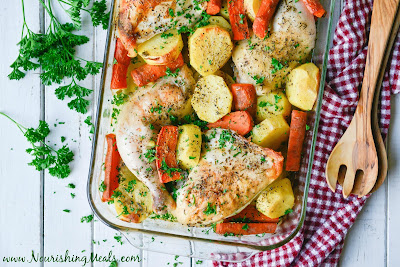
I love super easy meals on busy weekday evenings, don't you? This recipe (including the variations below) is one of my go-to weeknight meals. I wanted to share it with you because we all could use more ideas on how to create doable, nourishing family dinners.
In addition to this meal, here are some more of my favorite weeknight meals: Baked Wild Salmon with Steamed Potatoes, Kale and Pesto. Slow Cooked Chicken Curry over cooked quinoa. Soothing Red Lentil Soup served with cooked quinoa or basmati rice and a dollop of Raw Cilantro-Lime Chutney. I also have plenty more recipes for easy weeknight dinners in my Nourishing Meals cookbook and Whole Life Nutrition Cookbook!
I love to serve this baked chicken and potato dish with a big green salad or some sort of raw kale salad.
I know potatoes have received a bad rap for years, but did you know that potatoes contain high levels of potent antioxidants similar to levels found in dark cherries, strawberries, plums, and apples? In fact, the darker colored potatoes like the purple varieties contain the highest level of antioxidants....not surprisingly! All potatoes contain anti-inflammatory antioxidants like phenols, carotenoids, flavonoids, and anthocyanin compounds. Potatoes are also an excellent source of easily digested complex carbohydrates. Including something starchy with dinner can help induce restful sleep. I've seen many people (and experienced this myself) reduce their carbohydrate consumption too much to the point where they cannot fall asleep or stay asleep. For some, including potatoes with dinner might be just the thing! True comfort food!
Read more »Easy One-Pan Oven Roasted Chicken with Potatoes and Carrots
By Unknown

I love curry dishes, but curry powder typically contains chili peppers (a nightshade vegetable). If you are following the Elimination Diet and craving curry, try this stew! It's warming, though not as spicy as a typical curry would be. I use garam masala powder, cumin seeds, and turmeric powder to create a flavorful dish without chili peppers. I know it's not authentic at all, but it is totally satisfying if you are on a nightshade-free diet or elimination diet!
Consuming nightshades (potatoes, peppers, eggplant, tomatoes, goji berries) can trigger joint pain, migraines, skin rashes, acne, GI upset, and inflammation in SOME people. Are you sensitive to nightshades? Please share your experiences in the comment section below. If you think nightshades might be an issue for you, the best way to determine that is to do an Elimination Diet.
Garam masala is a staple spice blend at our house. I use it a lot to flavor roasted vegetables, or garbanzo bean dishes. Garam means warm, and Masala means spice blend. Garam masala typically contains cardamom, cinnamon, cloves, cumin, black pepper, and coriander.
Read more »
Masala Chicken and Vegetable Stew (Nightshade-Free)
By Unknown

To brine or not to brine...that is the question. I have found that brining a turkey produces very flavorful, juicy, and tender meat. In this post, I'm going to show you how to brine a whole turkey. Brining is the process of soaking the bird in a salt solution. Water from the brine is absorbed into the meat thereby increasing juiciness of the final roasted bird. I like to add flavoring agents as well such as sliced onions, garlic, oranges, and fresh herbs. A flavorful brined turkey will certainly impress your Thanksgiving guests!
I prefer to purchase turkeys from one of my favorite local organic permaculture farms. They are humanely raised and slaughtered right there on the farm. In our town there are a number of farms who raise organic turkeys and sell directly to the consumer. Sometimes you can ask your local Farmer's Market or health food store for the names and numbers of these farms. Often times you need to pre-order, though sometimes they have extra turkeys that they need to sell. Buying direct from a local, organic farmer is by far the healthiest and most sustainable way to enjoy a Thanksgiving turkey!
So now onto the actual process of brining a turkey! There are a few really important things to consider before embarking on this project. First, you will need a very large pot or container to hold the bird, brine, and flavoring agents. I use a 42-quart stainless steel pot. Some people use small coolers (this would work well if you can keep the temperature below 40 degrees, such as in a cold storage room or cold garage). Others use plastic bags. I prefer not to brine in plastic for various reasons, but if you do then you need to make sure you are using food-grade plastic, not plastic garbage bags. Second, you will need a space in your refrigerator to store the pot or container during brining. We have an extra refrigerator in our garage that I use. So as long as you have the right container and the space, then go ahead and try this recipe.
Read more »
Apple Cider & Herb Brined Turkey for Thanksgiving
By Unknown

Make this simple, nourishing quinoa recipe for dinner when you are pinched for time and need to use up the vegetables in your fridge! It's best to use leftover, or completely cooled, cooked quinoa when making pilafs or stir-frys. This way it doesn't clump up during the sautéing process. Use whatever veggies and fresh herbs you have on hand. For example, I've used carrots, asparagus, and cauliflower before. Snipped fresh chives and dill are excellent additions as well. If you don't have ground turkey, don't add it. Leftover cooked chicken or beans can work here too.
This recipe is suitable for phase 3 of our Elimination Diet, or omit the red bell peppers (nightshades) and use it during phase 2. If you are following one of the stricter variations for severe gut disorders, then omit the quinoa and serve the turkey-veggie part over cooked spaghetti or kabocha squash.
Read more »Turkey-Vegetable Quinoa Pilaf
By Unknown

We have a garden full of tender fresh collard greens right now which is what inspired me to create these nourishing raw wraps! My children even love them. Well, my 8-year old thinks they are just okay, and the littlest one can only really eat the pâté and cucumber strips, but the rest of the gang enjoys them!
I know I haven't been blogging much lately. I have a one-year old now who is into everything.....and four other children. Need I say more? However, we do have a new website in the works which I'm excited to share with you, so stay tuned! If you want to keep up with what I'm cooking and creating in my kitchen please follow me on Instagram. In the meantime....please enjoy this raw collard wrap recipe!
Read more »
Raw Thai Wraps with Cilantro-Pumpkin Seed Pâté
By Unknown

The days are getting shorter, colder, and busier! Having simple, nourishing meals ready to eat when you get home from work or school is so important. Now that the weather has changed, I've been using my slow cooker more often. This chicken curry recipe is so simple that I almost didn't post it! I've made it a number of times in the last few weeks. Too many actually, because now my children are starting to complain!
Today I forgot to add the tomatoes which caused the stew to lack some flavor and "oomph!" Adding something acidic, like tomatoes, helps to balance flavors. A little freshly squeezed lime juice can remedy a lack of tomatoes though!
You can add different vegetables to the pot if desired, just make sure to cut them large enough so they maintain their shape and don't turn to mush during the long cooking time. Try sweet potatoes, rutabagas, potatoes, or chunks of peeled and cubed pie pumpkin! If you want to add zucchini or red bell pepper then add them in during the last 30 to 60 minutes of cooking (less time if you have your slow cooker set on high, more if it is set on low).
Read more »
Simple Slow-Cooked Chicken Curry
By Unknown

There is nothing more nourishing than a bowl of warm vegetable bean soup on a chilly autumn evening! This simple soup can be made in about 30 minutes, perfect if you are crunched for time on a busy weeknight. I like to keep small containers of cooked beans in my freezer so I can pull them out and whip something up in a hurry! You could of course use canned beans, and if you do, the best brand to buy is Eden Organic. They use BPA-free cans and also cook kombu seaweed in with their beans, which helps to make them more digestible.
If you are not yet in the habit of cooking beans from scratch, here is what I do: after the kids go to bed I will sort through a couple of cups of dry beans (usually about 4 cups) and pick out any rocks or clumps of dirt, then rinse the beans in a colander. Then I place them into a large glass bowl and cover them with a few inches of warm water. Be sure to add enough water! Whenever I ask Tom to soak beans or nuts, he never adds enough water and in the morning they will have all expanded and be exposed to air. He's learning, slowly. ;-)
Read more »
Butternut Squash, Kale, & White Bean Soup
By Unknown

When summer's produce is in abundance we like to create meals that revolve around it, like this one. If you are vegan or vegetarian you can substitute cooked blacked beans or sautéed tempeh for the chicken. I think you'll find the Spicy Avocado Dressing rather addicting! Tom and I like to make a batch of this dressing with the whole jalapeño—seeds and all, but for the children we make it without the seeds.
Did you know that eating a small avocado with a meal containing carotenoids (found in the tomatoes, peppers, and salad greens) helps to absorb these beneficial compounds? Carotenoids, like beta-carotene, alpha-carotene, gamma-carotene, lycopene, lutein, zeaxanthin, and beta-cryptoxanthin all need to be consumed with fat to optimize absorption in the intestines. One also needs to have a functioning small intestine for this to occur (gluten, antibiotics, yeast overgrowth, and environmental toxins can damage the gut and impede absorption of fats and fat-soluble nutrients). Once in the body these carotenoids act as powerful antioxidants mopping up free radicals. Some of these carotenoids can also be converted into vitamin A (all-trans-retinol). We need vitamin A to assist with gene transcription, proper development of an embryo, various reproductive processes, night and color vision, skin health (acne), cellular communication, and proper immune function. Vitamin A is found in liver, meat, and dairy products. In order to convert carotenoids from plants into vitamin A we need to have adequate zinc and proper thyroid function as the T3 thyroid hormone helps in the conversion process. When pregnant and lactating the need for preformed vitamin A increases quite a bit so be sure to consume enough carotenoids from plants and vitamin A from animal sources, or if you are vegan, be sure to consume enough iodine, zinc, and selenium-rich foods for proper thyroid function so you can properly convert carotenoids from plants into Vitamin A.
Read more »
Chicken Fajita Salad with Spicy Avocado Dressing
By Unknown

We like to roast a whole, organic chicken on occasion for family meals. In the wintertime I will serve it with sautéed winter greens, such as kale and collards, a few spoonfuls of raw sauerkraut or cultured vegetables, and roasted root vegetables. In the springtime, I like to serve it with a light quinoa radish salad with fresh parsley, lemon, and chopped sorrel or napa cabbage. The next day I pull the meat off the bone and use it to make chicken salad, chicken pot pie, or toss it into soup.
So nothing goes to waste, I put the bones and skin into a stockpot along with a chopped onion, celery, carrot, garlic, peppercorns, fresh herbs, a piece of kombu, and a little cider vinegar; cover with water, and simmer for about 6 hours. This creates the most wonderful, nutritious, healing soup stock. You can freeze it in quart jars and use it everywhere stock or broth is called for in a recipe.
We always use organic chicken, but prefer to use organic chicken that is also local and pastured. What's the difference? Well, organic chickens can still be mass produced in large open hen houses. They are fed an organic grain feed and sometimes have access to the outdoors. Non-organic chickens are generally raised in cramped quarters and fed non-organic grains, which are most likely genetically engineered. (I won't even get into antibiotic use here). Pastured chickens can be ordered online but usually you will be able to find a farmer who sells them locally. We have quite a few around us, in fact you can find them in the frozen section of our local food co-op and health food store. Pastured chickens are usually fed some organic grain but also eat a diet rich in vegetable scraps, bugs, grasses, and moss creating a healthy balance of omega-6 and omega-3 fats. They also have plenty of fresh air, sunshine, and space to move.
Read more »
Simple Whole Roasted Organic Chicken with Garlic & Herbs
By Unknown

Lentils are what we make for dinner if I have not planned ahead of time to soak beans or buy ingredients for a meal. Lentils are inexpensive and cook quickly without the need for soaking. However, if you are gluten-sensitive or celiac, there is one thing you need to know about lentils. They are often cross-contaminated with gluten grains. We made a short video in our kitchen to show you. Hope you enjoy!
Read more »
Lentil and Kale Dal + a Video!
By Unknown

Tom and I returned home from Kauai yesterday. We had a wonderful vacation without children this time. They had plenty of fun at home with grandma though! This post is more than a recipe. In fact, after I learned more about mercury levels in Hawaiian fish, I debated posting this at all. But we all make mistakes, and I want to share what I have learned.

After eating this meal two days in a row, I had the thought to check one of the fish lists for safety of consuming opah while pregnant. Sure enough, it is on the avoid list if pregnant and "consume no more than one serving a month" for adults. Luckily I never consume fish with elevated levels of mercury so I don't feel this will pose a significant problem. Mercury in fish damages brain tissue, especially in developing fetuses, infants, and young children. It also damages heart tissue in adults and male reproductive organs and sperm. Two-thirds of mercury in our environment comes from coal-burning power plants, and a significant amount comes from medical and municipal waste. Microorganisms convert elemental mercury to methylmercury, a toxic form of mercury that our bodies cannot get rid of. It first accumulates in microorganisms at the bottom of the food chain and then moves up the food chain ultimately reaching the highest levels in predatory fish (tuna, shark, king mackerel, swordfish, opah, ono). Interestingly, through my research I also learned that opah, like tuna and other deep water fish, are caught by longline fish practices, a type of fishing that places thousands of hooks on a long line. This practice kills many sea birds and other marine creatures, such as sharks, dolphins, and sea turtles in the process.

Mercury in our food supply is a significant issue. When new scientific findings were released that canned tuna contained very high levels of mercury, the EPA downplayed the findings (the tuna industry is big, think lobbying, and the effect on the economy with a large drop of tuna consumption). You'll still see canned tuna on some of the "safe to eat lists" though in reality, it is not safe at all for pregnant women, children, or women of child-bearing age to consume. In fact, children can receive doses of mercury four times the acceptable level by eating six ounces of tuna a week! More info on mercury in fish can be found on websites such as EWG.org. Mercury has also been found in high-fructose corn syrup and therefore also in commercial foods that contain this ingredient, such as snack bars, barbecue sauce, jelly, yogurt, and chocolate syrup. What are we doing to our environment that we can't rely anymore on local food supplies? And why is it "ok" to inject mercury though a vaccine into a newborn baby? We are the cause of many of the problems ailing us today, and we are also the solution. Hopefully this post brings to light some of the issues that can be changed when we focus on human health and the health of our planet instead of the almighty dollar.

Fish Tacos
For a list of safe fish to consume check out this downloadable PDF from GreenAmerica.org or the Smart Seafood Guide 2010 by the Food and Water Watch. This recipe for fish tacos can be made with many of the fish on the safe list. When we make fish tacos at home, we use wild Alaskan salmon. Pictured here is also a fresh salsa that Tom made a few nights in a row (to go with our beans and rice). It is made from tomatoes, avocado, papaya, onions, lime juice, garlic, cilantro, and Hawaiian hot chili peppers. Or try serving them with this Papaya Salsa Recipe. We also like to serve fish tacos with thinly sliced napa cabbage and homemade guacamole.
Fish:
1 1/2 to 2 pounds "safe" fish, skinned and cut into chunks
2 large limes, juiced
2 to 3 cloves garlic, peeled
3 Hawaiian hot chili peppers or 1 to 2 jalapenos
1 to 2 teaspoons cumin
1 to 2 teaspoons Herbamare
coconut oil for sauteeing
Other Ingredients:
sprouted corn tortillas
sliced napa cabbage
salsa
guacamole
sprouts
It is much easier to have the fish skinned when you are purchasing it, otherwise you will need a very sharp knife and some skill. Place the chunks of fish (I usually cut it into 1 to 2-inch cubes) into a shallow baking dish, such as an 8 x 8-inch pan. Place the remaining ingredients (lime juice through Herbamare) into a blender and blend for 30 to 60 seconds. Pour marinade over fish. Marinate for about an hour.

To cook the fish, heat a large heavy-bottomed, stainless steel skillet over medium-high heat. Let the pan heat up for a few minutes, then add about 2 tablespoons of coconut oil. Add the fish, start with 1/3 to 1/2 the fish if your skillet is smaller (say 10-inches). If you add too much fish at once to a skillet, it is not able to sear and retain its liquid, therefore drying out quickly. You'll notice a bit of water at the bottom of the pan if you add too much at once. Saute for 3 to 4 minutes, depending on the size of the pieces. Remove from the skillet, add a little more oil, and then cook the remaining fish.
Serve with corn tortillas, salsa, guacamole, sprouts, and thinly sliced napa cabbage.

Here is a pregnancy shot of me in Kauai, overlooking Ke'e beach on the north shore.
More Main Dish Recipes:
Spicy Summer Black Bean Salad
Thai Fresh Green Curry
Balsamic Roasted Chicken with Figs and Sweet Onions
Subscribe to this Blog via Email
Fish Tacos from Kauai
By Unknown

Today I am sharing my mother's Puttanesca sauce recipe. Nearly every Christmas Eve that I can remember, she makes this sauce to serve over pasta. Can you imagine what it would be like to not be able to feed your family this Christmas? I can't. This is why I am excited to tell you that I am one of over 60 food bloggers participating in a campaign to increase awareness of childhood hunger this holiday season.
Share Our Holiday Table is a virtual, seven day progressive dinner to help raise funds for children in need. Did you know that nearly 17 million children, or one in four, live in homes without sufficient food. As a mother of four, I want to make sure that my children are well-fed daily with healthy, nourishing foods and I know that I am not alone. All parents want this for their children.
Children need proper nutrition for their immune systems to function well, for proper brain development and growth, to be able to pay attention and learn in school, and to be able to run, skip, hop, and jump all day long!
Now we all have a chance to help nourish a child in need. Donate today. Even five dollars if that's all you can do. Every little bit helps.
Read more »
Salmon Puttanesca
By Unknown

Our pantry and refrigerator are brimming with root vegetables this time of year. What better way to enjoy them than with a savory curry sauce? This recipe is vegan though it could be modified to add chicken or beef if desired. Another option would be to add a few cups of cooked garbanzo beans. Mmmmm, yum!
To continue on with the spirit of the giving season I am giving away another wonderful cookbook today. Stephanie O' Dea has written a bestselling slow cooker book entitled, Make it Fast, Cook it Slow. It is the perfect book if you are looking to eat healthier, are on a gluten-free diet (yes, all recipes are gluten-free), and don't have much time to prepare home-cooked meals. I have one signed copy for one lucky winner! Just leave a comment below to enter.
If you would like to preview some of her recipes you can go to her very popular blog, A Year Of Slow Cooking, which began in 2008 as a resolution to cook everyday that year using her slow cooker! Stephanie also has a new cookbook being released later this month, More Make it Fast, Cook it Slow: 200 Brand-New, Budget-Freindly, Slow-Cooker Recipes. The following curried vegetable recipe is one of mine, though Stephanie has a number of fabulous-looking curry recipes in her book.
Read more »If you would like to preview some of her recipes you can go to her very popular blog, A Year Of Slow Cooking, which began in 2008 as a resolution to cook everyday that year using her slow cooker! Stephanie also has a new cookbook being released later this month, More Make it Fast, Cook it Slow: 200 Brand-New, Budget-Freindly, Slow-Cooker Recipes. The following curried vegetable recipe is one of mine, though Stephanie has a number of fabulous-looking curry recipes in her book.
Curried Root Vegetables
By Unknown

Making gluten-free gravy is so simple. No need to add butter and make a roux. I have a few tips for creating rich, flavorful pan juices from cooking a bird, whether it be a turkey or chicken. These photos use a local, pastured, organic chicken, but I cook a whole turkey the same way using a larger stainless steel roasting pan. And if you want nothing to do with cooking a turkey this year then check out my recipe for this vegetarian main dish: Butternut Squash Casserole with Sage and Shallots.
To create rich pan juices, place your rinsed bird in a glass baking pan (9 x 13-inch for chicken or 10 x 14-inch for turkey). Chop up a large onion and a few stalks of celery. Toss them with a few teaspoons of Herbamare. Fill the cavity of the chicken with the celery and onions. If you are cooking a turkey you can use your favorite gluten-free stuffing recipe. I use my Wild Rice Stuffing.
Place the remainder of the celery and onions around the bird in the bottom of the pan. Add plenty of sprigs of fresh herbs, such as rosemary, thyme, sage, and marjoram. Add a few chopped carrots and a whole head of garlic, cut in half cross-wise.
Read more »
How to Make Gluten-Free Gravy
By Unknown
Subscribe to:
Posts (Atom)


